
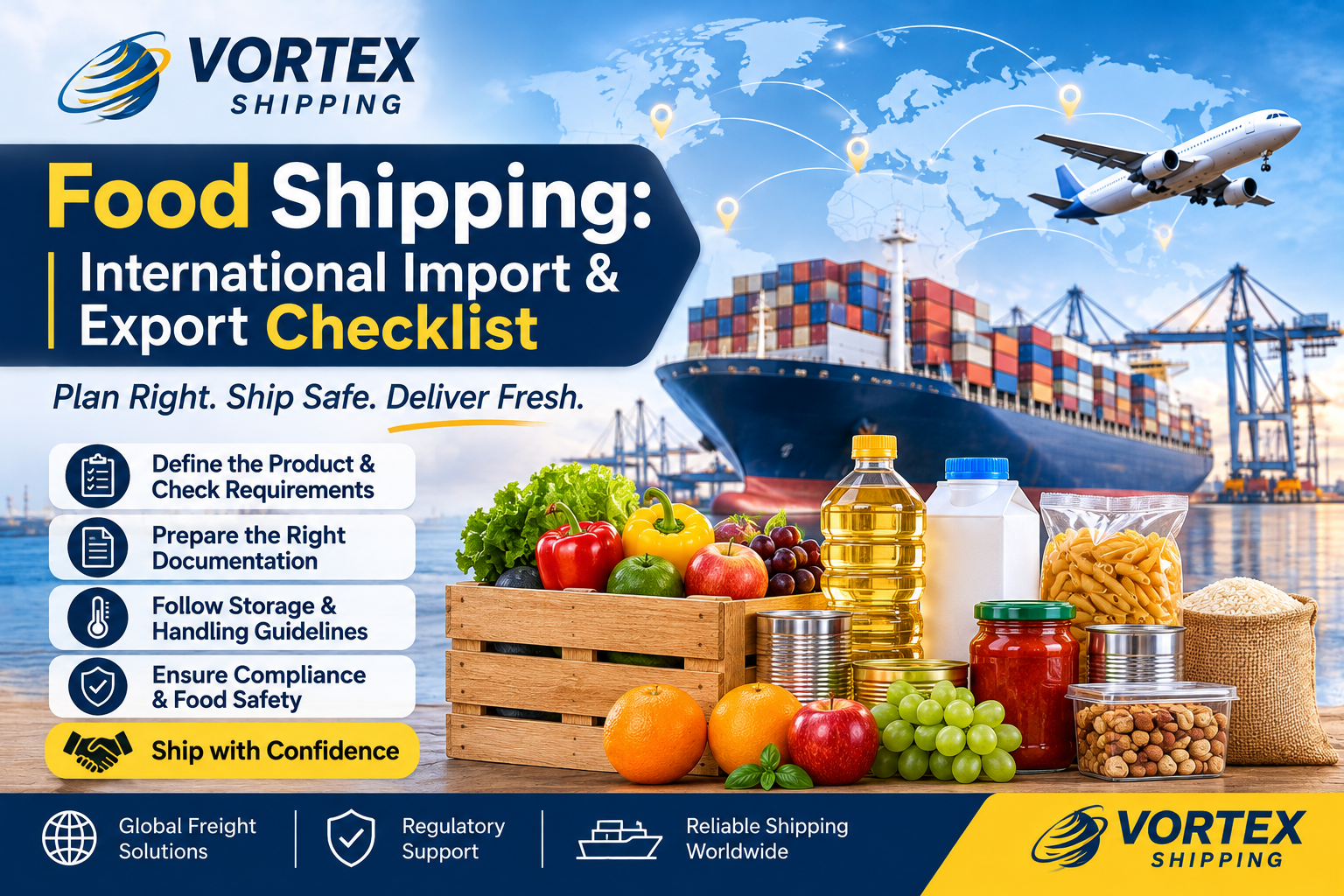
Food shipping across international borders should begin with the receiving importer’s product review, not with a last-minute clearance request after the vessel arrives. Packaging, ingredients, origin and the intended market can affect the information needed. A shipment may have a valid freight booking while still lacking what is needed for food release.
This guide focuses on commercial import preparation. Product-specific requirements must be confirmed with the responsible authority and importer before dispatch.
Food shipping: define the product and intended movement
Create a product sheet for every distinct item, including its name, manufacturer, origin, ingredients, packaging format and storage conditions. Explain whether it will enter the local market, be re-exported or move onward to another emirate. These are different operational situations.
For shipments entering Dubai, Dubai Municipality provides separate food assessment and consignment-release services. In every destination, have the importer identify the applicable authority, procedure and evidence for the actual product. Do not assume an old shipment’s approval covers a changed formulation or label.
For an EU-bound shipment, consult the European Commission’s food import-control overview and the receiving importer. Do not assume every food product follows the same controls. Origin, product category and current measures can change the assessment.
Food shipping: trader booking checklist
Use this checklist with the supplier and receiving importer before requesting a firm booking. The transport proposal should identify who supplies each item and which details remain subject to confirmation.
| Planning item | Information to prepare | Why it matters |
|---|---|---|
| Product profile | Ingredients, processing, product category, origin and packaging. | Requirements vary between products and destination markets; a previous food shipment is not a universal precedent. |
| Storage requirements | Manufacturer’s storage conditions and any temperature or humidity limitations. | The handling plan should protect the product throughout collection, main carriage and delivery. |
| Traceability | Batch references, production dates, shelf life and quantity by product. | The importer needs records that connect the shipment to the actual goods received. |
| Release and receipt | Importer approvals, applicable documents and the receiving warehouse’s process. | Destination clearance and unloading need named owners before the cargo leaves origin. |
Keep one agreed shipment brief for the supplier, freight desk and receiver. If a quantity, packing method or receiving location changes, circulate the revised brief before equipment or collection is confirmed. Retain the accepted quotation and its exclusions alongside the final packing list so that responsibility for each service remains clear.
Have a shipment ready to discuss?
Share the product specification, origin, destination, packing list, storage requirements, shelf-life information and importer details. Tell the desk whether the movement is a local-market import, transit or re-export so the correct scope can be assessed.
Resolve label questions before production
Provide the final label artwork for review before the supplier prints the full commercial run. Ask the importer to confirm applicable language, ingredient, date, origin and other label requirements. Keep a copy of the artwork version that was reviewed so the packed product can be checked against it.
If multiple pack sizes or brands are involved, identify them individually. A carton label, retail label and shipping mark serve different purposes. The shipping mark alone does not establish that the retail product is suitable for sale.
Assemble a consistent consignment file
Prepare the invoice, packing list, transport details and applicable origin or health documentation. Additional certificates depend on the food category, processing, origin and destination requirements. Animal-origin, plant-origin and mixed-ingredient products should not be treated as one identical documentation case.
Cross-check package count, batch references and weights before the document deadline. The importer should know who can answer a technical question from the supplier promptly. An unavailable manufacturer can delay the resolution of an otherwise simple discrepancy.
Match transport to the product specification
Ask the manufacturer to state acceptable transport and storage conditions. Some products can use ambient transport; others need an assessed cold chain. Do not assign a temperature based only on a broad category such as “food” or “chocolate”. The actual product and packaging matter.
Plan unloading and delivery as carefully as the ocean movement. A destination warehouse appointment should be compatible with the cargo’s condition requirements and remaining shelf life. Where temperature control is needed, provide written instructions and confirm the responsible parties at each handover.
Compare the cost of the whole import
The landed logistics cost can include collection, freight, terminal handling, broker services, inspection-related activity, storage and final delivery. Ask which items are fixed, estimated or excluded. Clarify taxes and duties separately with the broker rather than treating an indicative freight quote as a final landed-cost statement.
Allow time for applicable release checks before promising stock availability to retailers. For the customs side of the movement, use our customs clearance service guide.
Questions commercial importers ask
Does customs clearance automatically mean food release?
Do not assume so. Confirm all applicable customs and food-control steps with the importer and broker.
Can labels be checked after loading?
Late review can create avoidable rework. Resolve the product and label position before the supplier dispatches the consignment.
What should a freight enquiry contain?
Include product sheets, origin, packaging, weights, storage conditions, intended movement and importer details. Request a shipment review and use the commercial freight checklist to organise the transport information.
Confirm the origin, destination and delivery scope
For food shipping, give both the loading location and the final receiving address. Compare direct and connecting options only after the cargo and route have been accepted. An estimated main-carriage transit does not include every collection, border, inspection or delivery step.
Explore the Vortex Shipping global network and request a route-specific assessment. Dubai is a relevant hub for some movements; the enquiry should identify the actual origin and destination rather than assume every shipment starts or ends in the UAE.
Request a food freight assessment
Share the product specification, origin, destination, packing list, storage requirements, shelf-life information and importer details. Tell the desk whether the movement is a local-market import, transit or re-export so the correct scope can be assessed.
Editorial review: 19 October 2026. Check current authority guidance and shipment-specific acceptance before making commercial commitments.
Need a rate for this lane?
Message our Dubai desk on WhatsApp with the route and the cargo. We reply the same working day — and we will say plainly if the lane is not workable right now.