
Home › Land Transport
Land TransportLand Transport Company in Dubai
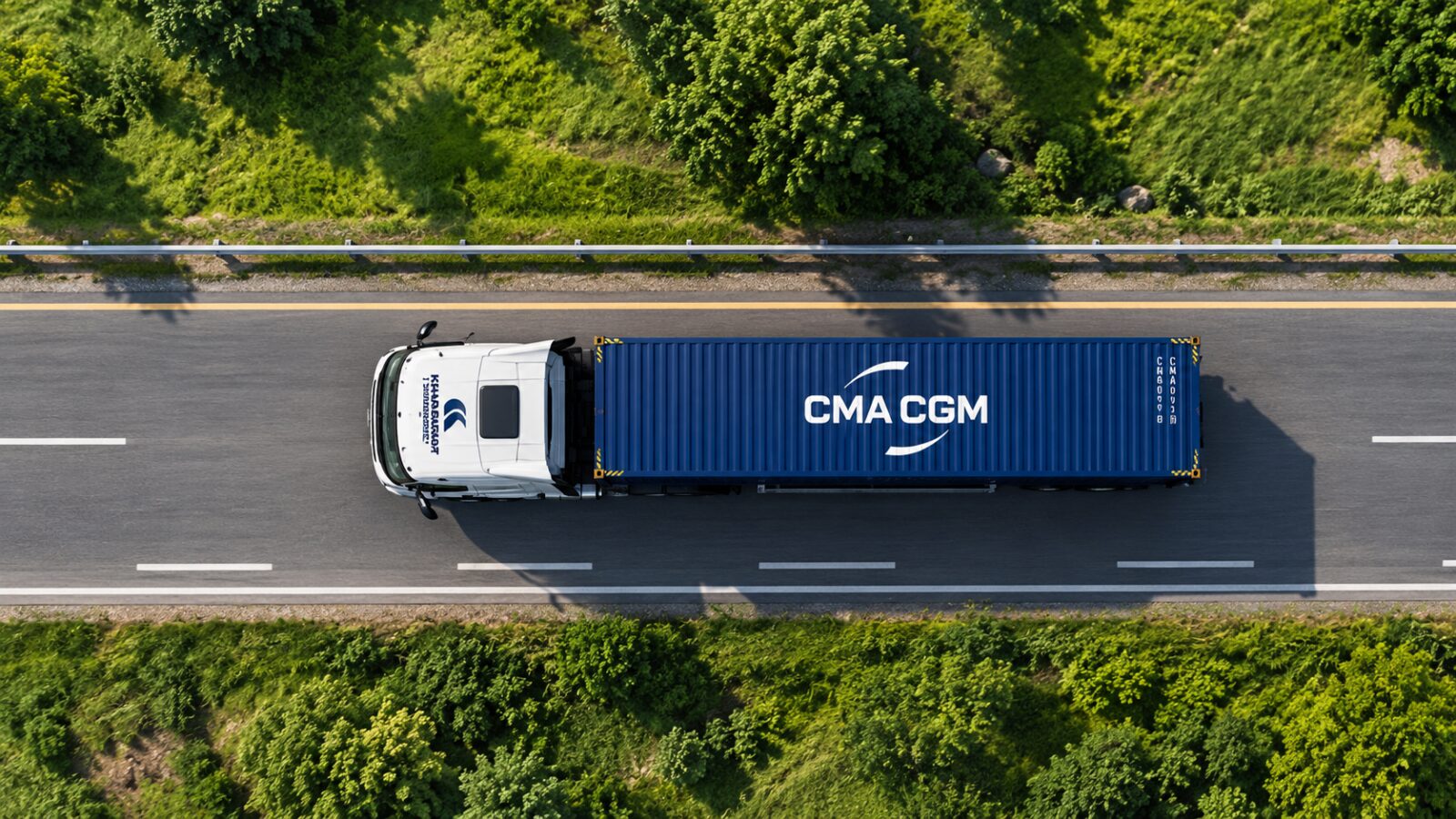
Sixty owned trucks moving cargo across the UAE and GCC, backed by the 25-year road legacy of our sister company Khan Baba Cargo Transport.
Our Own Fleet, Not Brokered Capacity
Most logistics companies in Dubai broker their trucking. When capacity tightens or a border backs up, a broker is at the back of someone else’s queue. We are not, because the trucks are ours.
Sixty owned vehicles operate across the UAE and GCC, supported by the 25-year operating history of Khan Baba Cargo Transport, our sister company within the group. That is a quarter of a century of route knowledge, border procedure and driver relationships on the roads that matter.
On regional lanes such as Dubai to Saudi Arabia, road is frequently faster and more predictable than sea once port handling and customs at both ends are counted.
Cargo and Coverage
FTL — Full Truck Load
Dedicated vehicle for your cargo, direct from collection to delivery with no intermediate handling.
LTL — Part Load
Shared capacity for smaller consignments where a full trailer is not justified.
Cross-Border GCC
Saudi Arabia, Oman, Qatar, Kuwait and Bahrain, with border documentation prepared before the truck moves.
Port Haulage
Container movements between Jebel Ali, Khorfakkan, Fujairah and your facility.
Oversized Loads
Low bed and extendable trailers for out-of-gauge cargo, with permits and escort coordination.
Project Support
Final-mile delivery for heavy lift and project cargo arriving by sea.
GCC road corridors we run
- UAE to Saudi Arabia
- Via Al Batha and Ghuwaifat to Dammam, Riyadh and Jeddah
- UAE to Oman
- Via Hatta and Al Ain to Sohar, Muscat and Salalah
- UAE to Qatar
- Multimodal routing via Saudi Arabia
- UAE to Kuwait & Bahrain
- Long-haul cross-border with full documentation support
- Domestic UAE
- All seven emirates, port to door and door to port
- Afghanistan
- Road and sea combination via regional gateways
How a Road Move Runs
Cargo & Route Check
Weight, dimensions, destination and any permit requirements confirmed upfront.
Vehicle Allocated
The right trailer type assigned from our own fleet, with a confirmed collection slot.
Documents Prepared
Border and customs paperwork completed before the vehicle departs, not at the crossing.
Delivered & Confirmed
Tracked across the route with proof of delivery on arrival.
The playbook
Moving Cargo Into Landlocked Markets
Afghanistan and Central Asia have no port. Every consignment is a sea leg followed by a road or rail leg, and the inland leg is usually where the cost and the risk actually sit. This is how we run those files, and how the corridors stand right now.
Corridor selection, not just a rate
Afghanistan is landlocked, so the sea leg is only half the job. The corridor decides the timeline, and in 2026 the corridors have moved. We price the sea leg and the inland leg together and tell you which crossing your cargo should use before anything is booked.
Where it goes wrong: Buying a cheap ocean rate to a port, then discovering the onward crossing is closed. The container sits at destination accruing storage while a new plan is made.
Documents built for transit, not just import
Transit cargo carries a heavier document set than a straight import: commercial invoice and packing list matched exactly to the goods, certificate of origin, transit declaration, consignee details, and end-user information where the commodity requires it. Solar modules classify under HS 8541.43; inverters are 8504 and must not share a declaration line.
Where it goes wrong: One line on the invoice that does not match the packing list. On a transit movement that is not a correction, it is a hold at the border.
Equipment and loading standard
We supply the containers and specify the loading pattern before stuffing. For solar modules that means floor protection, brick-pattern stacking, inflatable dunnage between pallet stacks and the first and last pallets strapped to the lashing rings. Loading photographs before the doors are sealed.
Where it goes wrong: A long inland leg over rough road with factory-standard stuffing. Glass breakage and hidden cell microcracks appear at the consignee, not at the port.
Ocean movement to the entry port
Booking, VGM, gate-in against the three cut-offs, and tracking through transhipment. Which port you sail to is a consequence of the corridor decision made at stage one, not the other way round.
Where it goes wrong: Treating the port as the destination. For landlocked cargo the port is the halfway mark.
Clearance and transit release
Import or transit declaration filed at the entry port, duty and tax position confirmed in advance, and the delivery order chased before free time starts. Our clearance desk handles this directly rather than subcontracting it.
Where it goes wrong: Starting destination paperwork on arrival day. Demurrage and detention are separate clocks and both are already running.
Road movement to the crossing
Our group runs its own road transport, which is what makes landlocked destinations workable. Trucking to the nominated crossing, border documentation prepared ahead, driver documents and permits verified before departure.
Where it goes wrong: Booking trucks after the container clears. On a volatile corridor the truck has to be positioned before the release, not after.
Border and handover
Crossings on this route close with little notice. We hold a fallback corridor on every file and confirm the status before the truck is dispatched, not while it is queuing.
Where it goes wrong: A single-route plan. When that crossing shuts, cargo waits at the border with no alternative arranged.
Final delivery and file closure
Delivery to the consignee, empty returned, proof of delivery signed, charges reconciled on one invoice. Any claim raised inside the notice period in the contract of carriage.
Where it goes wrong: Losing the claim window because nobody closed the file.
Afghanistan corridors as they stand today
| Corridor | Route | Status — August 2026 |
|---|---|---|
| Uzbekistan | Sea or rail to Central Asia, then Hairatan | Working — the Hairatan–Mazar-i-Sharif rail section reopened in May 2026 after reconstruction, and the crossing handles heavy daily truck volume. Currently the most predictable option. |
| Pakistan | Karachi or Port Qasim, then Torkham or Chaman | Unreliable — repeated closures through late 2025 and early 2026 from border friction and tighter driver documentation. Usable when open, but never plan it without a fallback. |
| Iran | Bandar Abbas or Chabahar, then Islam Qala | Not available — cut off following the Strait of Hormuz closure and the associated blockade. |
| China | Overland via the northern corridor | Reliable, slower — longer and more expensive, but the most predictable of the four for time-critical cargo. |
Corridor status on this route changes month to month, and the position above reflects reporting available in August 2026. We check it before every dispatch. Send us the origin, the commodity and the delivery town and we will tell you which corridor to use — including when the honest answer is to wait.
Land Transport Questions
Do you own your trucks or subcontract?
We own our fleet. Sixty vehicles operate under the group through Khan Baba Cargo Transport, our sister company with 25 years of road experience. That means we control scheduling rather than bidding for someone else’s capacity.
Is road faster than sea to Saudi Arabia?
Frequently yes. Once port handling, sailing and customs at both ends are counted, road often delivers sooner and with less schedule variance on GCC lanes.
What documents are needed for GCC cross-border moves?
Typically a commercial invoice, packing list, certificate of origin and the transport document, plus any product-specific certificates. We prepare and check these before the vehicle departs.
Can you move oversized cargo by road?
Yes. Low bed and extendable trailers are available, and we handle route surveys, permits and escort vehicles for loads that exceed standard dimensions.
Do you offer temperature-controlled transport?
Yes, reefer vehicles can be arranged for perishables and cargo with specified handling ranges.
Plan the collection, border and delivery together
For UAE and GCC road freight, share the collection and delivery locations, pallet or package count, gross weight, dimensions and loading access. Tell us whether you need a full truck or a shared-load option, and whether the cargo can be stacked.
Cross-border planning also needs the commodity, consignee details and clearance responsibilities. Agree who arranges unloading and what waiting time is included. A city-to-city freight price alone may not cover every part of the delivery.
Plan a Dubai to Saudi Arabia shipment or use our free commercial freight quote checklist.
Move Cargo by Road
Tell us the route, the cargo and the deadline. We will confirm the vehicle type, permits needed and a realistic delivery window.