
Home › DG Cargo
DG CargoDG Cargo Shipping in Dubai
Over five years of professional dangerous goods handling, with Class 2 and Class 5 as our core competence — a capability most freight forwarders decline.
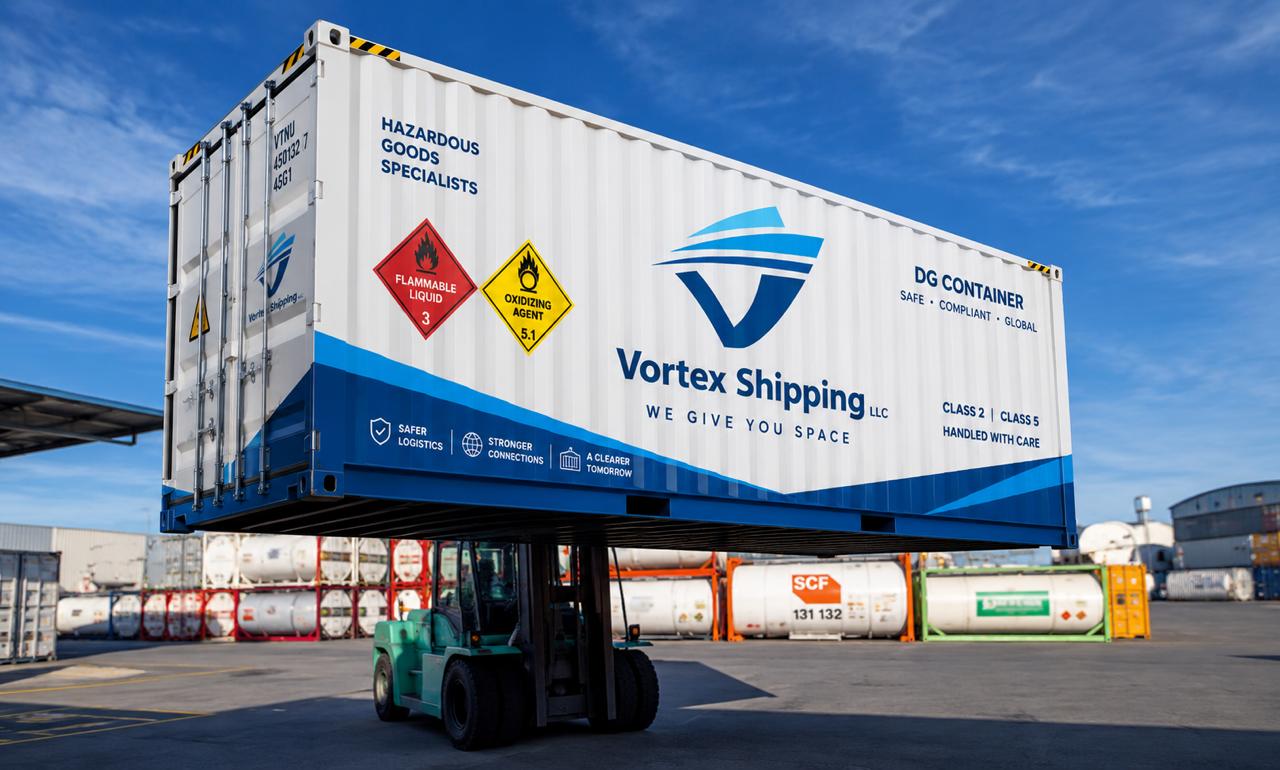
Hazardous Cargo, Handled Properly
Dangerous goods are where freight goes wrong expensively. A misdeclared shipment can be rejected at the terminal, offloaded mid-voyage, or attract penalties that dwarf the freight cost. Many forwarders in Dubai simply refuse DG cargo rather than carry that risk.
We have handled it for over five years. Class 2 gases and Class 5 oxidising substances are our core competence, and we manage the full chain: correct classification, compliant packing and marking, accurate declarations, and carrier acceptance secured before cargo moves.
If you are shipping hazardous cargo out of the UAE and have been turned away elsewhere, this is the conversation to have.
DG Classes and Compliance
Class 2 — Gases
Compressed, liquefied and dissolved gases. Our primary DG competence, covering flammable, non-flammable and toxic subdivisions.
Class 5 — Oxidisers
Oxidising substances and organic peroxides, with the segregation and stowage requirements they demand.
Classification Support
Correct UN number and packing group identified before booking, so acceptance is not refused at the terminal.
Packing & Marking
UN-approved packaging, correct labels, placards and orientation marks applied to the required standard.
DG Declarations
Shipper declarations prepared accurately for sea under IMDG and air under IATA.
Carrier Acceptance
Space secured with lines that accept your specific class and UN number, rather than discovering a refusal late.
What we need from you
- UN Number
- The four-digit identifier for the substance being shipped
- Proper Shipping Name
- As it appears in the IMDG or IATA dangerous goods list
- Class & Packing Group
- Determines segregation, stowage and carrier acceptance
- Safety Data Sheet
- The current MSDS or SDS for the material
- Net & Gross Quantity
- Per package and per shipment
- Packaging Details
- Type, UN marking and inner or outer configuration
How a DG Shipment Is Handled
Classification Review
We check the UN number, class, packing group and SDS before quoting anything.
Carrier Confirmation
Space secured with a line that accepts that specific class and UN number on your route.
Packing & Documents
Packaging, labelling and the DG declaration verified against IMDG or IATA requirements.
Loading & Sailing
Correct segregation and stowage confirmed, cargo accepted and tracked to destination.
The playbook
How a Class 2 or Class 5 Shipment Actually Runs
Most forwarders decline dangerous goods because the approval chain is long and a single missing document stops the container at the gate. This is the sequence we run on every DG file, and the exact points where shipments fail when somebody skips a step.
Classification, before a rate is quoted
Everything starts from the safety data sheet, not the product name. We take the UN number, proper shipping name, class, any subsidiary risk and the packing group straight off the SDS and confirm them against the current IMDG list.
Where it goes wrong: A supplier states the goods are non-hazardous while section 14 of their own SDS gives a UN number. That contradiction surfaces at the port, not in the office.
Carrier and route screening
No shipping line accepts every UN number on every route. Class 2 gases and Class 5 oxidisers are the two most frequently refused, and acceptance differs by lane and by vessel. We confirm the line will carry that exact UN number on your sailing before we quote a price.
Where it goes wrong: A booking is confirmed on a general-cargo basis, then rejected days later by the carrier DG desk, with the factory already loaded.
UAE port approvals — the step most people miss
Jebel Ali requires more than the carrier declaration. Import containers carrying IMDG Class 5 require a No Objection Certificate from Dubai Ports Authority, separate from the DG declaration filed with the line. Chemicals on the restricted or banned list additionally need a SIRA permit to obtain the EHS NOC. Every approval must be in hand before the discharge cut-off.
Where it goes wrong: Assuming the DG declaration covers everything. Without the DPA NOC in place a Class 5 container is not permitted to discharge, and demurrage starts while the paperwork is chased.
Packaging, marking and labelling
UN-certified packaging matched to the packing group, correct hazard labels and placards, and overpack marking where it applies. Class 2 adds valve protection, upright orientation and pressure-relief requirements. Class 5 adds strict separation from organic material, fuels and Class 3 flammables.
Where it goes wrong: Correct goods in packaging certified for a different packing group. It looks compliant and is not.
Declaration and document set
The dangerous goods declaration signed by the shipper, the SDS, commercial invoice, packing list, certificate of origin, and the HS classification checked against the datasheet rather than copied from a previous file.
Where it goes wrong: An HS code carried over from a similar-looking product. It drives duty, permits and trade-defence exposure, and a wrong one holds the container at clearance.
Stuffing, segregation and VGM
The IMDG segregation table is applied twice — inside the container between commodities, and again in the stowage plan on board. Dunnage and lashing to prevent movement, then the Verified Gross Mass submitted. The shipper named on the bill of lading stays legally accountable for that figure even when somebody else weighed it.
Where it goes wrong: Segregation handled at stowage but not inside the box. Two incompatible UN numbers in one container will not be accepted.
Gate-in against DG cut-offs
DG cargo runs on earlier cut-offs than general cargo, and there are three of them: documentation, VGM and physical gate-in. We work backwards from the earliest, not from the sailing date.
Where it goes wrong: Planning around the vessel date. More DG containers roll on a missed documentation cut-off than on a full ship.
Sailing, arrival and release
Tracking through transhipment, destination approvals prepared in advance, clearance filed by our own desk, and the delivery order chased before free time starts rather than after.
Where it goes wrong: Waiting for arrival to begin the destination paperwork. The demurrage clock does not wait.
Class 2 and Class 5 at a glance
| Class 2 — Gases | Class 5 — Oxidisers | |
|---|---|---|
| Typical cargo | Compressed, liquefied and dissolved gases; refrigerants; aerosols | Oxidising agents, peroxides, certain fertiliser and pool chemicals |
| Main risk | Pressure, leakage, asphyxiation, flammability | Fire intensification, heat-sensitive decomposition |
| Handling focus | Valve protection, orientation, temperature control | Temperature control, separation from fuels and organics |
| Jebel Ali import | Carrier DG approval and declaration | Carrier approval plus a DPA No Objection Certificate |
| Restricted chemicals | Checked against the banned and restricted list | SIRA permit required to obtain the EHS NOC |
| Refusal rate | High — many lines decline outright | High — and rising with tighter port controls |
Requirements change — the Class 5 NOC rule at Jebel Ali is recent and the restricted chemical list is updated. Send us the safety data sheet before you commit to a purchase order and we will tell you what the shipment actually needs, including when the honest answer is that the cargo cannot move on that route.
DG Cargo Questions
Which DG classes do you handle?
Class 2 gases and Class 5 oxidising substances are our core competence and where we have the deepest experience. Other classes can be reviewed case by case depending on the substance, quantity and route.
What information do you need to quote DG cargo?
The UN number, proper shipping name, class and packing group, plus the safety data sheet, net and gross quantities and packaging details. Without these no responsible forwarder can quote or book.
Why do other forwarders refuse DG shipments?
Because misdeclaration carries real liability — cargo rejection, offloading, fines and in serious cases vessel incidents. It requires trained staff and carrier relationships. We have built both over five years.
Can dangerous goods move by air?
Yes, for permitted substances under IATA rules, with certified packing and a valid DG declaration. Some materials that are acceptable by sea are forbidden by air, which is why classification comes before mode selection.
Do you handle DG documentation only?
We prefer to handle the shipment end to end, because the documentation is only correct if it matches the packing and the booking. Documentation-only support can be discussed for existing arrangements.
Start dangerous-goods review before booking
Provide the commodity name, safety data sheet and available dangerous-goods classification details before cargo is collected. The review needs packaging information, quantities, route and requested transport mode, rather than only a general product description.
Do not assume that acceptance on one carrier or previous shipment guarantees acceptance on another. The booking team must review the actual cargo and required documentation. Share any temperature, segregation or handling concerns before confirming a sailing or flight.
Shipping Hazardous Cargo?
Send the UN number, class and safety data sheet. We will confirm feasibility, carrier acceptance and cost before you commit.