
Home › Customs Clearance
Customs ClearanceCustoms Clearance Agent in Dubai
Prepare your declaration before cargo arrives. HS classification, duty and VAT guidance, and Mirsal 2 submissions handled so your cargo is not sitting in a yard accruing storage.
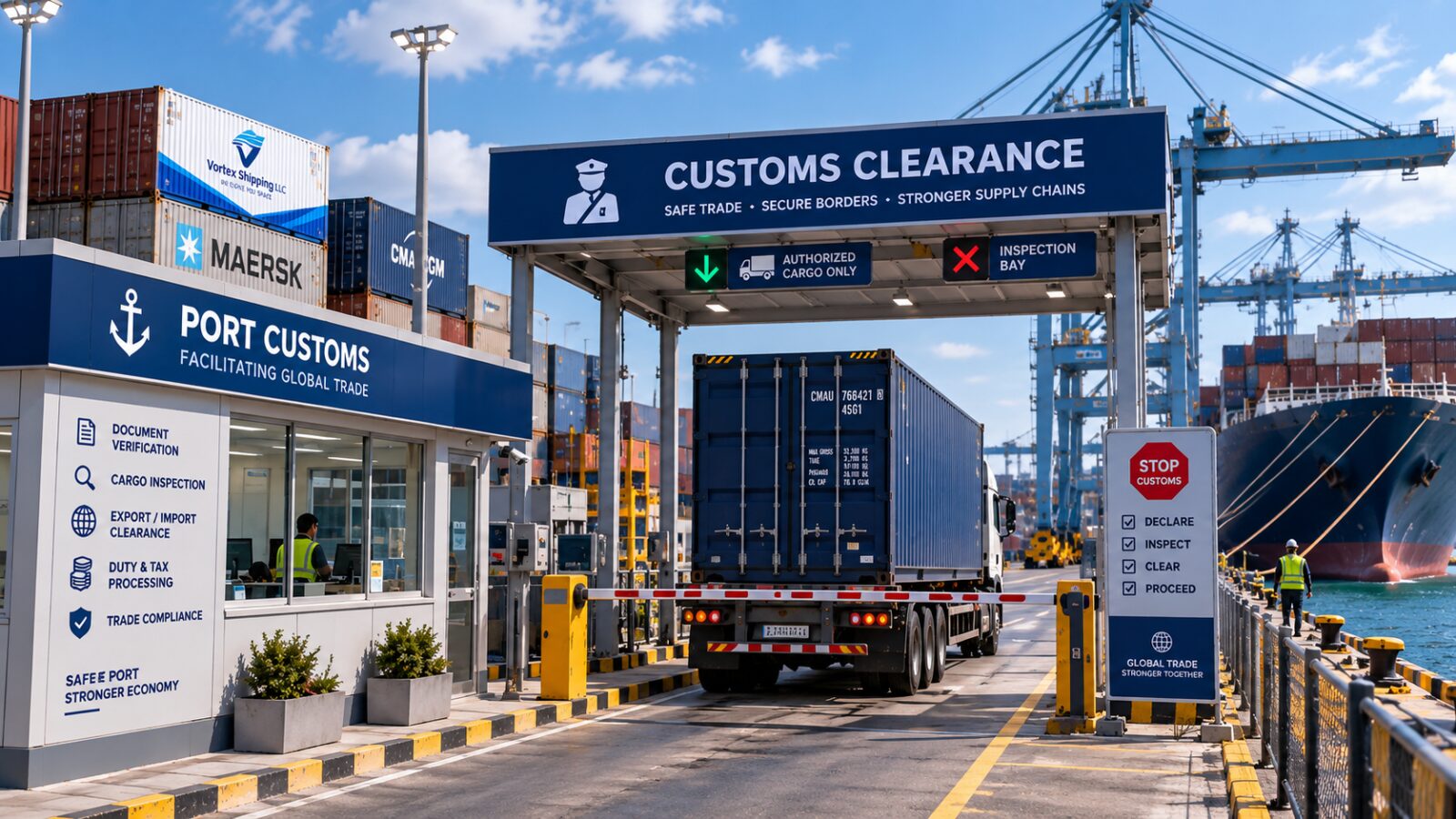
Most Delays Are Paperwork, Not Inspection
Cargo rarely sits at Jebel Ali because customs decided to open the container. It sits because an HS code was wrong, an invoice value did not tie to the packing list, or a required certificate was never obtained.
Every day a container waits costs storage and demurrage, and those charges accrue whether or not the error was yours. We prepare declarations properly the first time — classification checked before submission, values reconciled across documents, and product-specific approvals identified before the vessel arrives rather than after.
We handle both export and import clearance, for mainland and free zone cargo, whether or not we arranged the freight.
Clearance Services
HS Classification
Correct tariff codes identified before submission. A reclassification at the port costs amendment fees, storage and days.
Import Declarations
Mirsal 2 submissions prepared and lodged, with values and quantities reconciled across every document.
Export Declarations
Export clearance for outbound cargo, including certificates of origin and chamber attestation where required.
Duty & VAT Guidance
Standard duty is 5% of CIF with 5% import VAT on CIF plus duty. We calculate your actual liability before arrival.
Free Zone & Mainland
Free zone entry, duty deferral for re-export cargo, and transfers between free zone and mainland.
Permits & Approvals
Product-specific approvals identified early — ESMA, MOHAP, Dubai Municipality and others depending on commodity.
Documents we need from you
- Commercial Invoice
- Showing HS codes, values and country of origin
- Packing List
- Weights and dimensions per carton or pallet
- Bill of Lading / AWB
- The transport document for the shipment
- Certificate of Origin
- Attested where the destination or duty relief requires it
- Product Certificates
- Conformity, health or standards approvals by commodity
- Import Code
- Your registered UAE importer code and trade licence
From Documents to Release
Document Review
We check invoice, packing list and transport document against each other before anything is submitted.
Classification
HS codes confirmed and duty liability calculated so there are no surprises at assessment.
Declaration Lodged
Submission made through Mirsal 2 with supporting documents attached.
Inspection & Release
Any inspection attended, duty settled and cargo released for collection or delivery.
Customs Clearance Questions
How much is customs duty in Dubai?
Standard duty is 5% of the CIF value — goods plus insurance plus freight. Import VAT of 5% is then calculated on CIF plus the duty. Some categories carry different rates or exemptions, which we confirm from the HS classification.
How long does clearance take at Jebel Ali?
Release time depends on the declaration, supporting documents, product approvals and any inspection. Share the shipment file before arrival so the team can identify the outstanding steps; a complete file does not guarantee a fixed release date.
Can I recover the VAT I pay on import?
If you are VAT-registered in the UAE, import VAT is generally recoverable through your return, so treat it as cash flow rather than cost. Ask the clearance team whether any relief or refund procedure applies to the shipment.
What if my goods go into a free zone?
Duty can be deferred while cargo remains in the free zone, and is only payable when goods enter the mainland. For re-export cargo that never enters the mainland, this is a genuine saving.
Do you clear cargo you did not ship?
Yes. Customs clearance can be arranged as a standalone service for cargo forwarded by someone else, provided the documentation is made available in time.
What causes the most clearance delays?
Mismatched HS codes, invoice values that do not reconcile with the packing list, and missing product-specific certificates. All three are avoidable if documents are reviewed before the vessel arrives.
Review the shipment documents before arrival
Send the commercial invoice, packing list and available transport documents early. The cargo description, quantities, weights and consignee details should be consistent across the file. State whether the goods are entering the mainland, a free zone, transit or re-export.
Requirements depend on the goods and customs procedure. Product approvals, certificates or inspection may be needed, so ask the clearance team to review the actual shipment. Keep duties, taxes and third-party charges separate from the agent’s service fee when comparing quotations.
Read the customs planning guide or use our free commercial freight quote checklist.
What to send for a clearance review
Start with the commercial invoice, packing list, transport document and the importer or exporter details. State the commodity, arrival gateway, intended delivery address and whether the cargo is for mainland import, free-zone entry, transit, temporary admission or re-export.
Dubai Customs’ declaration guidance lists invoice, packing list, certificate of origin, delivery order and bill of lading or air waybill, with requirements varying by procedure and port.
- Check consistency: invoice quantities, packing details and consignee information should agree.
- Disclose the product: clear descriptions and classification help identify permits or certificates before arrival.
- Separate charges: compare the agent’s fee with duties, taxes, handling and third-party charges listed separately.
- Plan release and delivery: confirm outstanding documents, possible inspection and collection arrangements.
For a new booking, coordinate freight and clearance early. For cargo already moving, send the available file and current shipment status so the team can review what is still needed.
Cargo Stuck at Customs?
Send us the documents and the container number. We will tell you what is missing and what it takes to release it.