
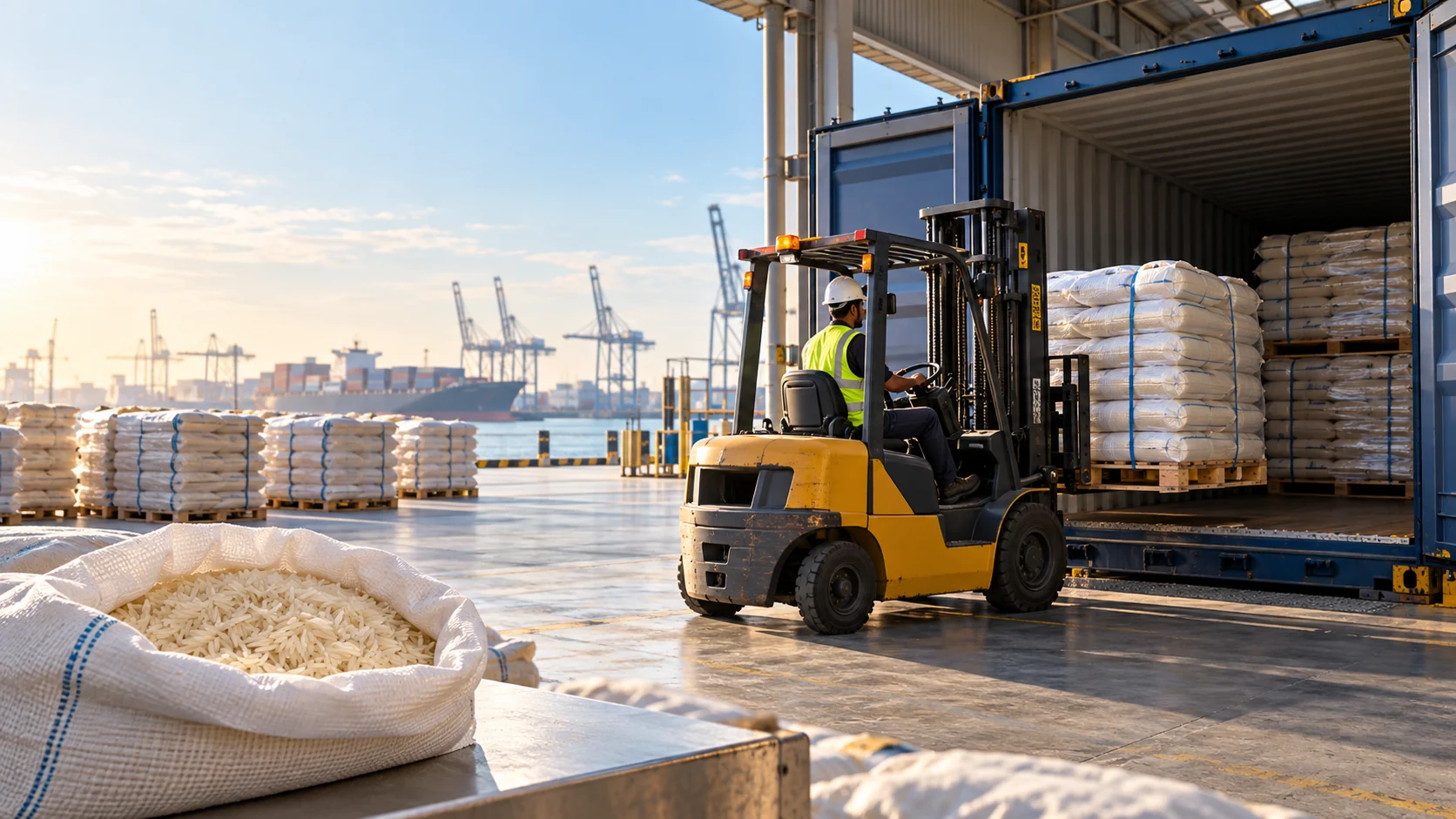
Rice shipping starts with a precise cargo specification: rice variety, bag size, shipment weight, origin and delivery location. A booking described only as “one container of rice” leaves important questions unanswered. The buyer, supplier and forwarder need the same packing and clearance instructions before the cargo leaves the mill.
This guide is for commercial traders moving bagged rice in containers. Loose grain carried in a bulk vessel requires a different handling and chartering assessment. In everyday trade, “bulk order” does not necessarily mean loose bulk transport.
1. Confirm the rice specification and shipment size
For international rice shipping, describe the variety, processing and packing before requesting a rate. State whether the order is basmati or another variety, the bag size, country of origin and the supplier’s cargo-ready date. The buyer should confirm the quality specification and any required inspection evidence in the sale contract.
For example, 1,000 bags containing 25 kg each represent 25,000 kg of net rice. Bags, pallets and protective materials increase the gross weight. This arithmetic is a packing-list check, not confirmation that the cargo is acceptable in a particular container or on a particular road route.
2. Choose the packing method for rice shipping
Ask whether the supplier will floor-load individual bags or build pallets. Floor loading can use space efficiently, while pallets may simplify warehouse handling and counting. Compare the total delivered cost, including labour at both ends, rather than choosing on container utilisation alone.
Record the net rice weight separately from gross cargo weight. Bags, pallets and protective materials add weight. Container payload, road limits and the proposed loading distribution must be checked for the actual equipment and route; do not use a universal tonnes-per-container promise.
3. Protect rice from moisture and contamination
Request a clean, dry container inspection before stuffing. Agree a moisture-management plan with the supplier and packing specialist, including suitable bag material, any lining or desiccant arrangement, and protection from rain during loading. Desiccants cannot compensate for wet cargo or a leaking container.
Photograph the empty container, bag condition, loading stages and final seal. Keep batch identification visible in the packing records. If a buyer reports damaged bags or odour on arrival, this evidence helps identify where the condition changed. Avoid mixing food cargo with incompatible products merely to fill spare space.
For plant-health questions, check the importing country’s requirements with its national plant protection organisation. The IPPC overview explains the international phytosanitary framework. Product processing, origin and destination determine which checks apply; a certificate should never be assumed necessary or sufficient for every rice shipment.
4. Confirm destination import or re-export requirements
As one destination example, Dubai Municipality lists separate services for food-item assessment, local-market release and food import for re-export. Other markets have their own requirements. Confirm the intended customs movement and destination-specific approvals before shipment. See the official food services directory.
Ask the receiving importer to confirm the applicable product registration, labelling and consignment documents for the rice and country of origin. Do not assume a certificate used on an earlier shipment covers a new supplier, packaging format or destination.
5. Check the rice shipment documents
- Commercial invoice with the actual rice description, origin and agreed sale terms.
- Packing list showing bag count, bag weight, batch references and gross weight.
- Transport document details matching the consignee and shipment.
- Applicable food, origin and plant-health documentation confirmed by the importer.
- Collection address, delivery address and loading/unloading arrangements.
Send a draft document pack before the booking deadline. A spelling difference in the consignee or a quantity mismatch is easier to correct while the goods remain at origin.
6. Compare rice shipping costs and delivery scope
Request a breakdown for origin handling, ocean freight, destination handling, clearance, inspection-related costs and delivery. Confirm which charges are excluded, the currency, quotation validity and free-time terms. A low ocean rate can be offset by expensive destination handling or slow unloading.
For planning, distinguish the vessel’s estimated transit from the door-to-door delivery window. Supplier readiness, cut-offs, transshipment, inspection and warehouse appointments all affect the latter. For transport options, read our sea freight service guide.
7. Confirm warehouse receiving and unloading
Before loading, ask the receiving warehouse to confirm its appointment process, access restrictions and unloading equipment. Floor-loaded bags need a labour plan; palletised cargo needs compatible handling equipment. Agree who counts the bags, checks the seal and records damaged packaging.
Give the receiving team the final packing list before arrival. If delivery is split between warehouses, identify the quantity and destination for each part of the order. These instructions should appear in the transport scope rather than being added after the container arrives.
Rice freight quote comparison checklist
Use the same shipment details for every quotation. The following checklist helps a trader compare complete rice shipping proposals without mistaking a low ocean-freight figure for the final delivered cost.
- Origin: Confirm supplier collection, stuffing, weighing and export-document scope.
- Main freight: Identify equipment, route, transshipment assumptions and quote validity.
- Destination: Separate terminal handling, broker services, inspections and delivery.
- Delay costs: Ask how storage and equipment charges apply if cargo release or unloading is delayed.
- Cargo protection: Confirm whether insurance is included, its terms and the evidence needed for a claim.
Ask for an itemised offer based on the agreed sale terms. When an item is excluded, identify who will arrange and pay for it. An estimated arrival date should be supported by the proposed route and remain subject to the booking conditions.
Rice shipping: frequently asked questions
Is a 20-foot or 40-foot container better?
That depends on gross weight, bag layout, equipment limits and receiving arrangements. Ask for a loading assessment using the supplier’s actual packing list.
Can rice share a container with other goods?
Only after compatibility, contamination risks and handling have been assessed. Food safety and cargo condition take priority over filling unused space.
What details are needed for a rice shipping quotation?
Send origin, destination, ready date, rice variety, bag size, total weight, packing method and delivery terms. Use our freight quote checklist and request a shipment assessment.
Confirm the origin, destination and delivery scope
For rice shipping, give both the loading location and the final receiving address. Compare direct and connecting options only after the cargo and route have been accepted. An estimated main-carriage transit does not include every collection, border, inspection or delivery step.
Explore the Vortex Shipping global network and request a route-specific assessment. Dubai is a relevant hub for some movements; the enquiry should identify the actual origin and destination rather than assume every shipment starts or ends in the UAE.
Editorial review: 19 October 2026. Check current authority guidance and shipment-specific acceptance before making commercial commitments.
Need a rate for this lane?
Message our Dubai desk on WhatsApp with the route and the cargo. We reply the same working day — and we will say plainly if the lane is not workable right now.